
Digital twin for 3D printed body armour: how BMT and Vikela completed the Digital Catapult Digital Twin Adoption Accelerator
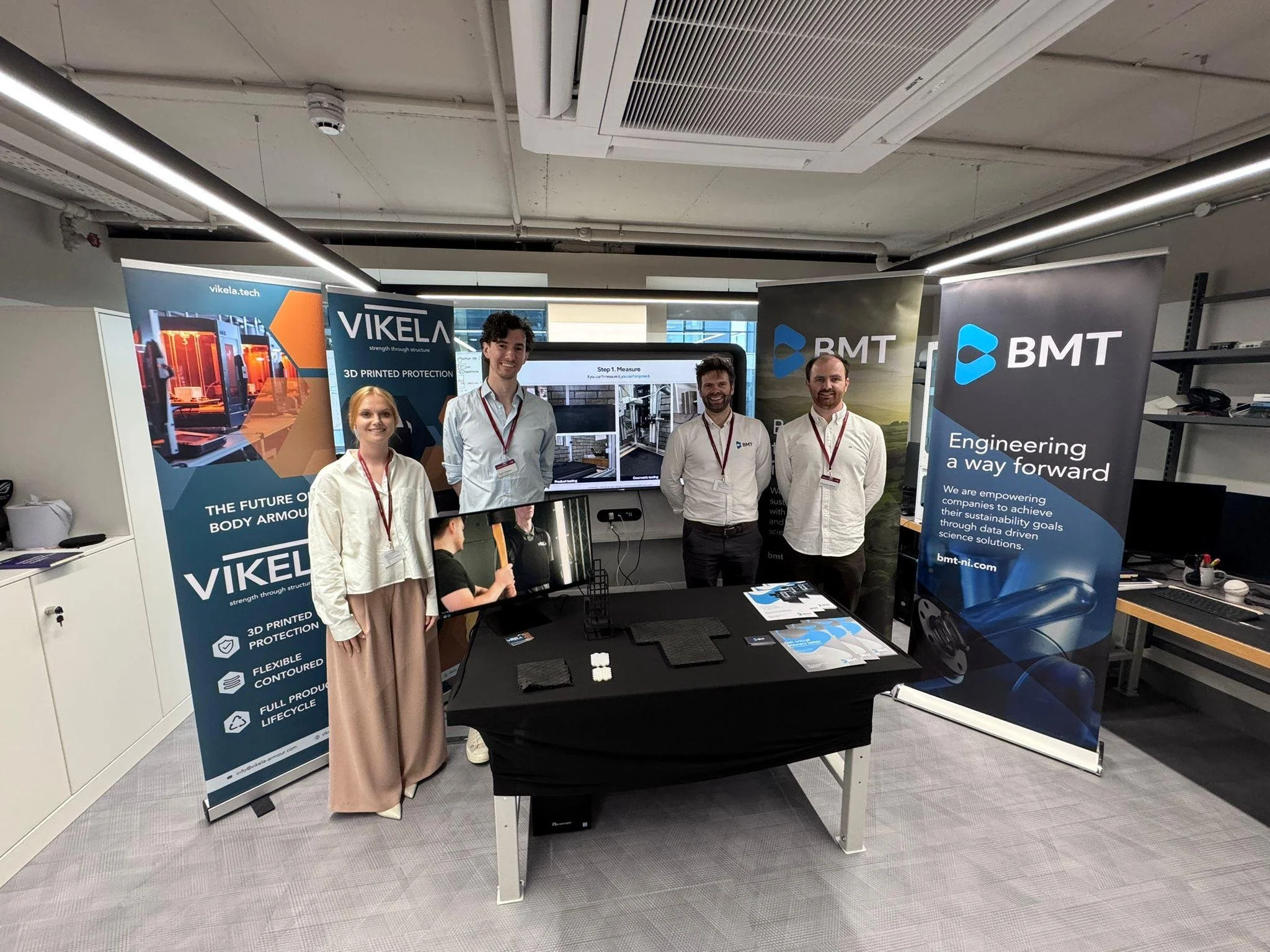
BMT and Vikela have successfully completed our collaborative project through the Digital Catapult Digital Twin Adoption Accelerator programme. The goal was to develop a validated digital twin for Vikela's lightweight, 3D printed body armour systems, and we are pleased to report the project delivered exactly that. If you missed the beginning of the journey, our opening post sets out how the programme started and what we set out to build. This post covers what we built, how the workflow came together, and what we think it means for both protective equipment development and for engineering simulation more broadly.
From material data to a working digital twin
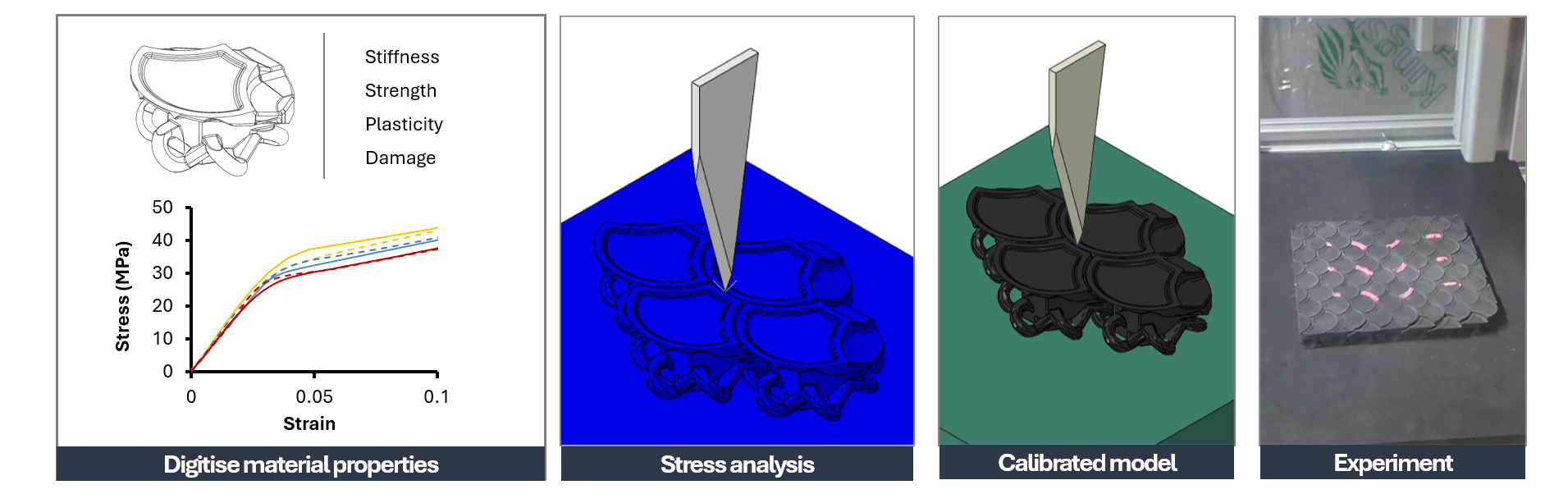
The workflow we developed over the course of the programme brought together two of BMT's core capabilities: material characterisation and FEA simulation.
The starting point was characterising the mechanical properties of Vikela's 3D printed material under the loading conditions relevant to protective performance. This step is the one that most simulation-led development programmes skip or approximate. Using assumed or generic material properties rather than measured ones is precisely what causes simulation predictions to diverge from physical test results, and for body armour development, where the performance requirements are both exacting and safety-critical, that gap is not acceptable.
With measured material data in hand, BMT used finite element analysis to simulate knife penetration performance through Vikela's armour geometry. The simulation output gives Vikela's engineering team a quantitative prediction of how a given design configuration will respond to a defined threat scenario, without needing a physical prototype to answer the question.
What the completed workflow enables
The practical output of the programme is a development process where design changes can be tested and iterated digitally before physical prototyping begins. Simulation is used to predict how a design will perform. Physical testing is used to validate rather than discover.
For protective equipment development that distinction matters considerably. Physical test cycles for body armour are time-consuming, resource-intensive and limited in the number of design variants that can be practically evaluated in a given timeframe. A validated digital twin changes the equation: more design options can be explored, earlier in the process, at a fraction of the cost of equivalent physical testing.
The result is faster development cycles, more informed design decisions made at the concept stage when changes are still cheap to implement, and a higher degree of confidence in the performance of a design before it enters physical validation.
Showcasing at the programme final event
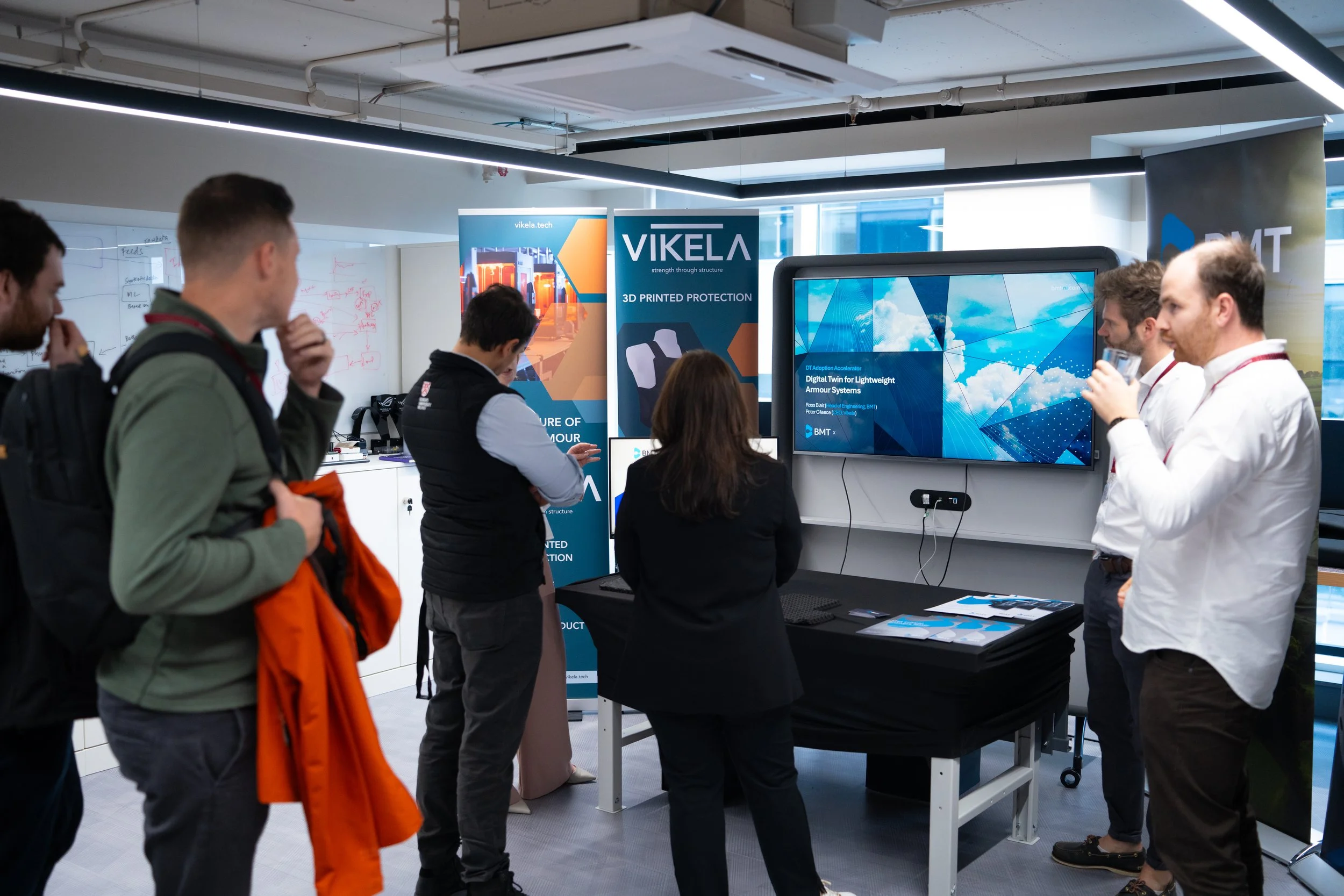
We had the opportunity to present the completed project alongside Vikela at the Digital Twin Adoption Accelerator's final showcase event, sharing the work with the wider Digital Catapult and UK Digital Twin Centre community.
Presenting alongside the broader network of UK companies and researchers active in digital twin development gave genuinely useful context for where simulation-led product development sits within the national effort to accelerate engineering innovation through digital methods. The conversations at the event reinforced that the appetite for moving from physical to digital first development workflows is growing rapidly across sectors.
A huge thank you to Digital Catapult, the UK Digital Twin Centre and the team at Vikela for a collaborative and rewarding programme. We are proud of what we built together.
The wider implication
This project sits outside BMT's core packaging sector, but the engineering principles at its heart are the same ones that underpin everything we do: characterise materials accurately, build simulation models from measured data rather than assumptions, and use physical testing to validate rather than to discover.
Whether the application is lightweight body armour, sustainable PET packaging or novel composite structures, that approach consistently delivers the same outcome: better design decisions, made faster, with greater confidence in the result.
To find out more about how BMT's simulation and material characterisation capabilities could support your own development programme, get in touch with our team.