
What is SMART Prototyping for PET bottle development? A guide for packaging engineers
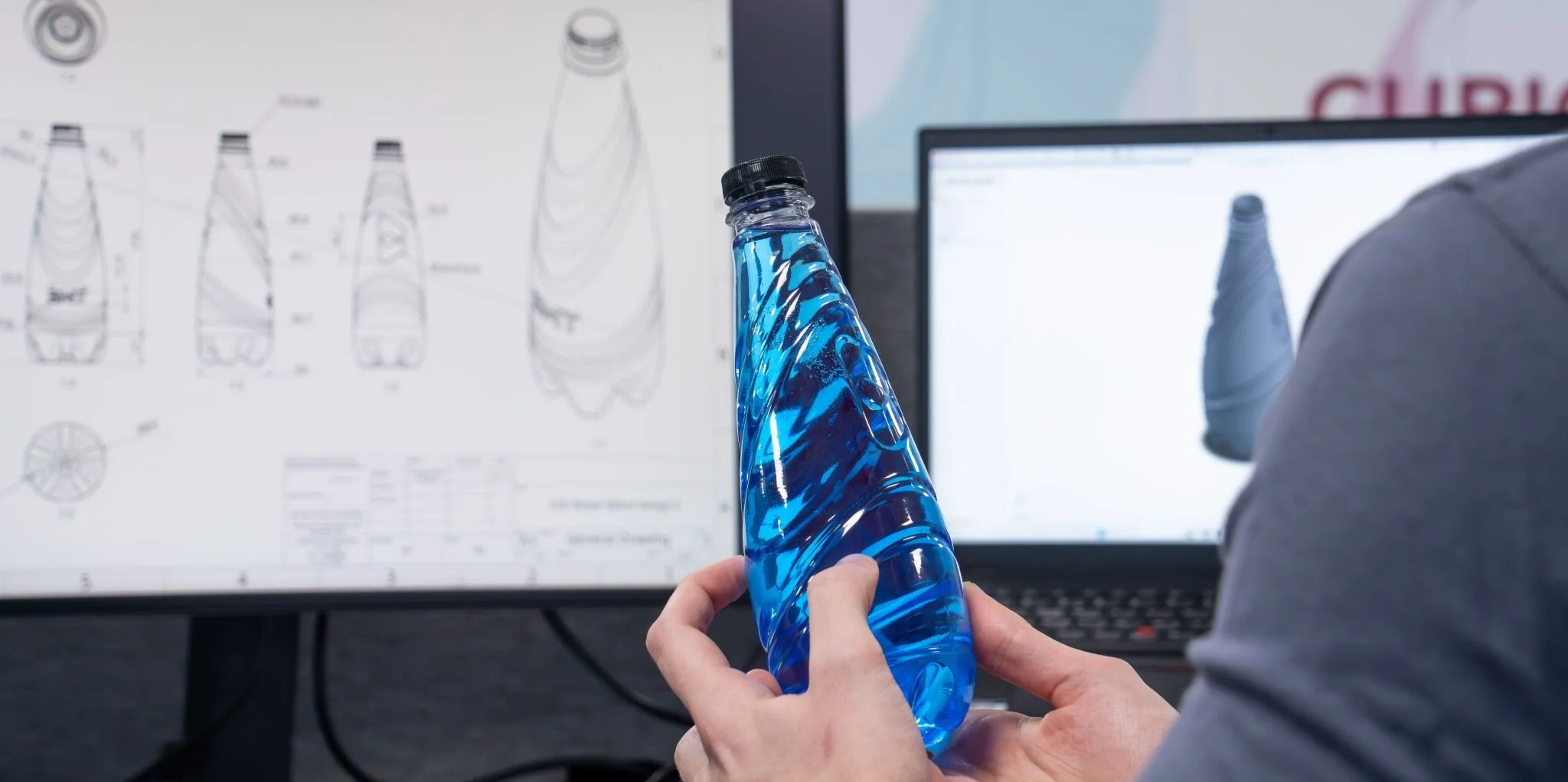
Our Belfast‑based team specialises in data‑driven tools for PET bottle development. We help fast‑moving consumer goods and beverage companies turn lab concepts into tangible prototypes in just five days.
Committing to production tooling before you know how your bottle will perform is one of the most expensive risks in packaging development. A single set of aluminium blow moulds can cost upwards of £50,000, and if the design needs reworking after tooling, you're looking at significant delays, additional spend, and the pressure of a launch timeline that isn't moving.
SMART Prototyping, developed by BMT, is a data-driven approach that lets packaging engineers validate bottle designs at lab scale before a single production mould is cut. The result: physical prototype bottles that accurately reflect real production conditions, delivered in as little as five days.
The problem with traditional bottle development
Most bottle development programmes follow a familiar and costly pattern. A design is created, tooling is commissioned, trial production runs begin, problems emerge, and the cycle of adjustment starts. Each iteration costs time and money. Each delay puts pressure on the launch.
The alternative, relying on simulation alone, solves part of the problem. Virtual modelling can predict how a design will perform under top-load, burst pressure, or fill conditions. But simulation is only as accurate as the material data behind it. Without real-world validation, there's always a degree of uncertainty.
SMART Prototyping bridges the gap between virtual design and production confidence.
How SMART Prototyping works:
1. Digital simulation
Every project begins with a virtual model of the bottle design. Using advanced finite element analysis (FEA) simulation, BMT engineers assess wall thickness distribution, material behaviour, and performance under real-use conditions, before any physical work begins. This step identifies design risks early, when changes are cheap.
2. 3D printed blow moulds
Rather than investing in production aluminium tooling, BMT produces 3D printed moulds that replicate the target bottle geometry. These moulds are used in conjunction with BLOWSCAN, BMT's lab-scale stretch blow moulding machine, to produce physical prototype bottles using the same preforms and process conditions as the intended production environment.
3. Physical validation testing
The prototype bottles are tested against real performance requirements: top-load strength, burst pressure, material distribution, and where required consumer testing. The data from these tests feeds back into the simulation model, improving accuracy and giving packaging teams the confidence to commit to tooling.
What does SMART Prototyping deliver?
The outputs from a SMART Prototyping programme include:
Physical prototype bottles produced under production-representative conditions
Process window data showing the optimal blowing parameters for your preform and material
A clear recommendation on design readiness before tooling investment
For teams working with sustainable materials, particularly recycled PET (rPET), SMART Prototyping is especially valuable. rPET behaves differently to virgin PET under stretch blow moulding conditions, and understanding that behaviour at lab scale significantly reduces the risk of defects in production.
Who is SMART Prototyping for?
SMART Prototyping is used by:
Brand owners and FMCG teams launching new bottle formats or refreshing existing designs
Converters and packaging developers managing the transition to sustainable materials
R&D and innovation teams that need rapid iteration without tying up production lines
Procurement and project managers who need to de-risk tooling spend before sign-off
The results
BMT's SMART Prototyping service has supported projects across beverage, personal care, wine, and household packaging. Clients have achieved weight reductions of up to 20%, validated rPET designs before scale-up, and reduced development timelines by up to 70% compared to traditional trial-and-error approaches.
As published in PETnology, BMT's approach combines virtual simulation, lab-scale physical prototyping, and real process data in a way that most development programmes simply can't replicate with production equipment alone.
Ready to validate your bottle design before committing to tooling?
Get in touch with the BMT team to discuss your project.