How BLOWSCAN works: lab-scale PET stretch blow moulding explained
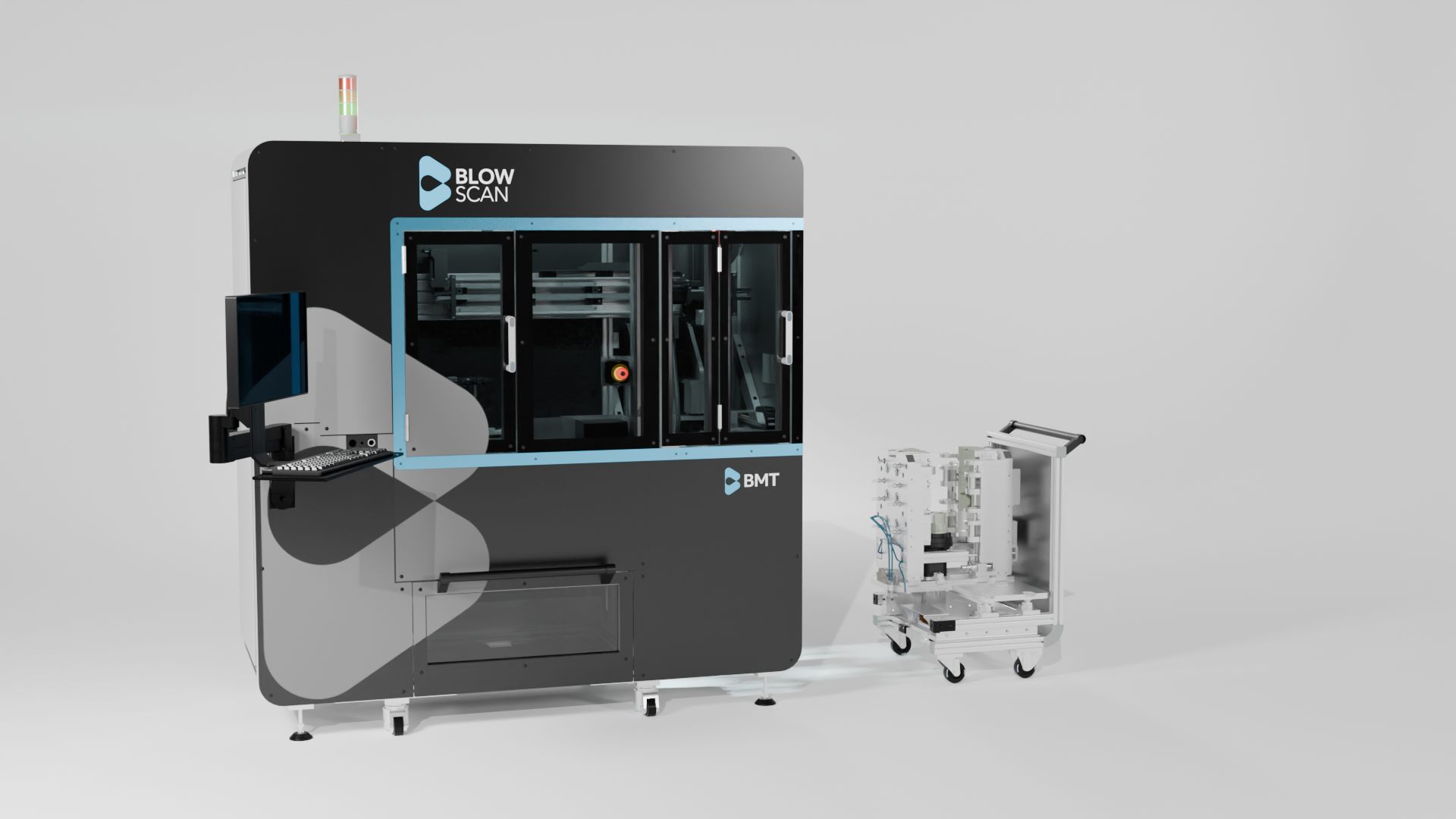
What does it actually take to turn a PET preform into a finished bottle? Our new render gives you a clear, visual answer — walking through exactly how BLOWSCAN, BMT's lab-scale stretch blow moulding machine, replicates the preform-to-bottle process under controlled, repeatable conditions.
What is BLOWSCAN?
BLOWSCAN is a lab-based stretch blow moulding machine purpose-built to investigate the complexities of the preform-to-bottle transformation. It was developed out of a major collaborative research partnership and has since become a core part of BMT's SMART Prototyping and material characterisation services.
Unlike production-scale equipment, BLOWSCAN uses a pre-loaded batch feed system rather than a continuous preform feed, removing the need for conveyors, hoppers and unscramblers, and significantly reducing the equipment footprint.
How the process works
Heating
Preforms can be heated using either an oil bath or infrared (IR) heating. The two methods isolate different properties: oil bath heating disregards preform colour and reveals pure mechanical behaviour, while IR heating reflects a more realistic industrial heating profile, including the influence of preform colour and material composition.
Stretching and blowing
Once heated, the preform moves to the blowing station, where the operator applies stretching and blowing parameters representative of their production process. BLOWSCAN offers two distinct testing modes.
Free-blow mode
The mould is removed entirely, allowing the preform to deform freely. This reveals detailed information about preform quality and material behaviour, comparing inflation pressure, temperature and blowing geometry against a reference preform.
Mould-blow mode
Using a modular 'roll-in, roll-out' mould subassembly, the operator can test a specific bottle design while keeping heating and blowing parameters consistent. This enables rapid bottle prototyping without ever touching a production line.
Collection
Once formed, the bottle is ejected from the blowing station into a collection drawer for retrieval and inspection, ready for physical testing and analysis.
Why this matters
This dual functionality, free-blow and mould-blow in a single machine, gives BLOWSCAN a unique role across the packaging supply chain. Material producers can assess the blowing potential of novel materials without cumbersome industrial equipment. Preform manufacturers can verify batch quality before it reaches converters. And brand owners and converters can produce small runs of bottle prototypes without interrupting live production.
For materials like recycled PET (rPET) or bio-based resins — which behave differently to virgin PET under heat and stress — this capability is particularly valuable. It allows manufacturers to understand exactly how a new material will perform before committing to a full production run.
Want to see BLOWSCAN in action for your own material or bottle design? Get in touch with our team to discuss your project, or find out more about our SMART Prototyping service.